- Your wellness loving bestie in your inbox 💌
- Posts
- 6.3 Hours On Your Phone, 1M to Age Slower, Plus a 55% Plot Twist - Your Week in Wellness is Here
6.3 Hours On Your Phone, 1M to Age Slower, Plus a 55% Plot Twist - Your Week in Wellness is Here
Your weekly dose of what's hot, what's healing, and what's actually worth leaving the house for!
Harriet & Katie
February 22, 2026

Hi besties,
Wheeeew. We made it.
The Year of the Snake did what it came to do - the shedding, the quiet recalibrations, the "what in the cosmic plot twist is happening right now?" moments. All of it.
And now we enter the Year of the Fire Horse. And for so many in this community, the beginning of Ramadan. Ramadan Kareem to all who are observing - we're sending you so much love and wishing you a month of peace, reflection and restoration.
While everyone is calling Fire Horse energy fast and fierce, we see it a little differently. It's not about speed. It's about movement. And as the pace naturally softens this month, it feels like a quietly powerful time to ask: what actually needs to shift?
Which is why one piece of data genuinely stopped us in our tracks this week.
A new study showed Americans are now spending 6.3 hours a day on their phones. That's roughly 40% of waking life 🤯. Despite all the "I'm deleting Instagram" declarations, usage keeps climbing. And it's not Gen Z driving it anymore - adults 36+ are now the heaviest users (gulp), while younger generations are increasingly craving analogue experiences and anti-algorithm connection.
It's easy to read that and feel alarmed (and a little/lot-tle guilty).
But as two founders running businesses largely from our phones - with six children under eight between us - we truly believe it’s more nuanced than that. Our phones give us real freedom. The nap time emails. The school run voice notes. The flexibility we've intentionally built our lives around.
It's complicated. And if you're balancing work, family and ambition, we know you feel that tension too.
So before the guilt spiral begins, maybe the better question isn't how much - it's why.
Is it building something? Connecting? Avoiding? Escaping?
For us, small shifts have made a difference. We've been using the Opal app to add a little friction - a pause between impulse and scroll. Not quitting tech. Not a detox. Just a more conscious choice.
Because we don't want to abandon technology. We want a healthier relationship with it. Fewer pings. Less doomscrolling. More of the life happening right in front of us.
That feels like Fire Horse energy to us. Not dramatic reinvention. Just values-aligned movement. Choosing better. Not doing more.
Now, with that off our chest we've got some spicy updates in the Wellness Wire this week, and honestly the events happening across the city right now? Chef's kiss. Let's get into it.
Plus, Clubist have kindly gifted our community a complimentary dual-class package for The Dark Room — your chance to try two of their brand-new concepts: HIIT & Run and Lift & Load. Ready to sweat? Fill in your details here.
With love (from your friendly Fire Horse accountability partners)

📍Ouronyx
I first came across Ouronyx last year at a panel event. During the Q&A, someone asked the founder, Ida, about Botox, fillers, and the pressure women feel to either “age gracefully” (or quietly do the opposite and never admit it!) and her response tells you everything you need to know about the approach Ouronyx take to aesthetics.
She spoke about how she has always leaned deeply natural, how holistic wellbeing has always been central to her life, and yet after a particularly intense period in her forties she looked in the mirror one morning and didn’t quite recognise herself. Not in a dramatic way. Just that subtle sense of disconnection. So that day she booked Botox. And one ml of filler.
She described walking out feeling more like herself again. Not younger. Not different. Just restored.
This, I believe, is what they mean when they say “mindful aesthetics”, and I’m happy to share that the in-person experience reflects that ethos entirely.
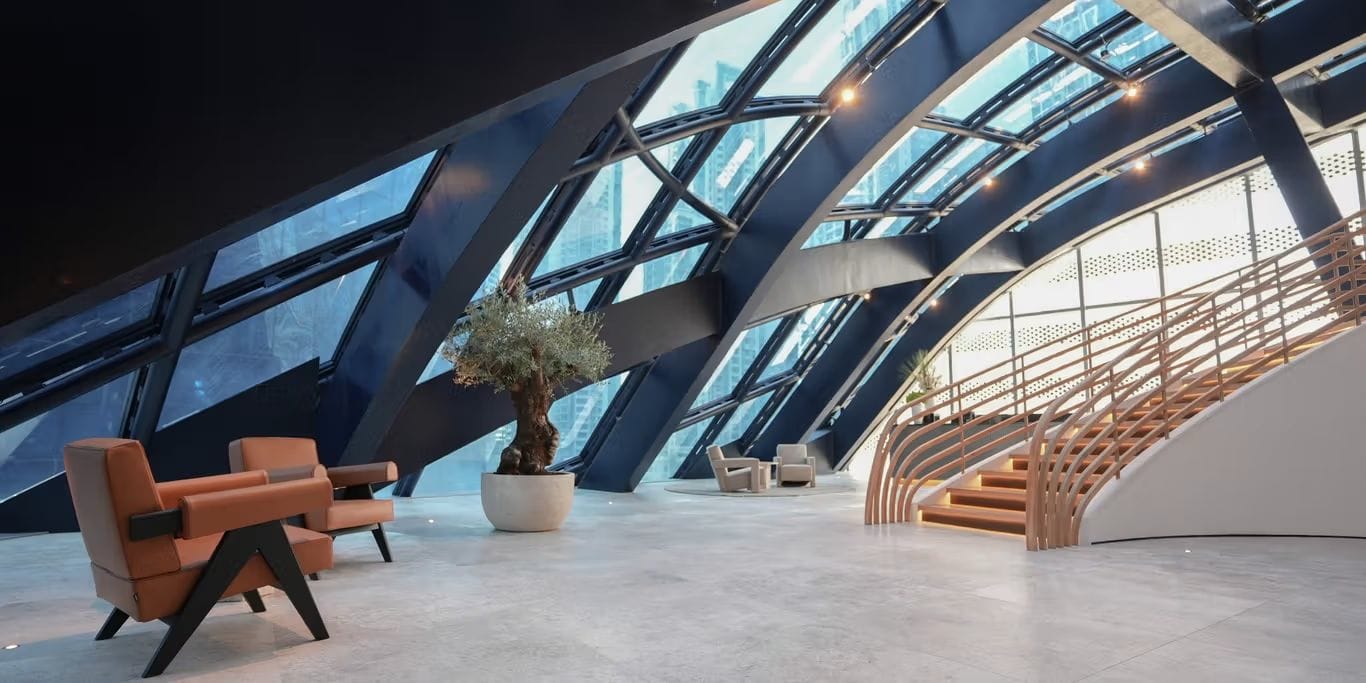
First of all, let’s talk about the space. It is stunning. Architecturally striking, filled with natural light, minimal but not clinical. You certainly don’t feel like you’re walking into a high turnover aesthetic clinic. You feel like you’re entering a very intentional environment.
Then comes the consultation process, which was refreshingly different.
First up, you complete a personality assessment. Not a token form, but a thoughtful set of questions about how you think, how you make decisions, how you like information delivered. You’re not being assessed. You’re being understood.
After that, you remove your makeup in a beautifully lit space and they take a series of photographs, smiling, frowning, resting etc. It’s detailed and clinical in its precision, but it doesn’t feel critical. They are essentially studying your face in motion to see how it behaves, rather than looking for things to fix.
I then met with Dr Maya Shahsavari, a UK-trained ENT consultant surgeon and aesthetic doctor, and our consultation lasted close to an hour. We spoke about lifestyle, stress, sleep, what I notice when I look in the mirror, what bothers me, what doesn’t. There was no rushing. No upsell energy. No “while you’re here we could also…” undertone. Just an intelligent, grounded conversation about what would enhance rather than alter.
What I really appreciated most was that nothing felt pushy. I shared my thoughts on what I was willing to explore and what treatments were an absolute no, and that was completely accepted, not argued against. What really struck me was the spaciousness of the whole experience. Space to talk. Space to share concerns. Space to sit with whether something feels right for you.
Oh, and one of my favourite things. They mix their own skincare, completely tailored to you. No twelve-step routine. No cupboard full of half-used serums. Which, if you are a full Type B personality like me, is an absolute game changer.
If you’ve been unsure about aesthetics, if you’ve always leaned natural but lately found yourself questioning a little, if you want subtle and thoughtful rather than dramatic and obvious, this is the clinic for you.
Ouronyx isn’t about changing your face. It’s about helping you feel aligned with it. And in a space (and a city) that can so easily tip into extremes, that feels refreshing.
Ouronyx Clinic - The Opus Building, Business Bay (Next to the ME Hotel)
This week’s edit carries a bold kind of energy. With the Year of the Horse setting the tone, expect movement with purpose, grounding rituals, mama strength, and moments of reflection as Ramadan approaches. Big momentum, steady resets - choose what feels right for you.
🌕 Sound Healing & Vision Boards – Year of the Horse Edition
Sunday 22nd February, 7:30 – 9:00 PM
Esque Gallery, Dubai Hills
This 90 minute experience blends a 45 minute sound bath and breath-led healing to ground and reset your energy, followed by a guided vision board session to align your goals for this next chapter. Think clarity, momentum, and that feeling of stepping into something new - intentionally.
Book here
🔥 Lunar New Year Special with Sanctum
Monday 23rd February, 11:30 AM
SIRO, One Za’abeel
Year of the Horse energy, but make it embodied. This special Sanctum session is designed to challenge your limits while grounding your spirit - bold movement, strong presence, and that powerful-but-peaceful feeling Sanctum does so well.
Book here
🌙 Women’s Ramadan Circle
Tuesday 24th February, 10:00 PM
Blue Door by Delano
An intimate Suhoor gathering for the HWH community. A space for reflection, honest conversation, and shared energy as we move into Ramadan. Expect connection, strength, resilience and a moment to pause with women who get it.
Book here
💛 Strong Mama by Core Within
Launches Wednesday 25th February (4-week series)
Wednesdays 11:00 AM – 12:00 PM & Saturdays 8:00 – 9:00 AM
Jumeirah Golf Estates
A strength class designed for pregnancy, postpartum and beyond. Strong Mama focuses on functional strength, deep core reconnection, pelvic floor awareness and breath-led movement - the kind that actually supports your body in real life. This isn’t about bouncing back. It’s about building strength that feels steady, supported and sustainable. Katie will be joining these!
Book here
🌊 SUP Under The Stars
Thursday 26th February, 8:00 PM
Amara Spa & Pool, Park Hyatt Dubai
Candlelight. Water. Stillness. A floating SUP Yin yoga session followed by immersive sound healing, all held under the night sky. Expect slow, grounding movement on the water, then deep nervous system reset through therapeutic frequencies.
Book here
✨ Floating Sound Meditation with Spa Access
Friday 27th February, 8:30 AM – 9:15 AM
Talise Spa, Burj Al Arab
Float. Surrender. Fully switch off. This guided sound meditation takes place in a floating setting, allowing your body to completely let go while therapeutic frequencies support deep relaxation. Guests also receive spa access, extending the reset beyond the session and encouraging full physical and mental restoration.
Book here
INDUSTRY TRENDS AND NEWS
🏢 Your Building Might Be Your Next Wellness Retreat
Oliver Ripley, founder of experiential hospitality brand Habitas, has launched Sekra in the GCC - a new residential concept backed by Uber founder Travis Kalanick and major real estate investors. The pitch? Rethink rental living for a generation that feels increasingly disconnected. Sekra blends design-led apartments with hospitality-style service, cultural programming, integrated tech, and built-in wellbeing. Think circadian lighting, longevity-focused spaces, and on-site experts ranging from nutritionists to therapists and sexual wellness specialists. With nearly 80% of adults under 40 renting and loneliness on the rise, especially among expats - Sekra is positioning itself as a community-first alternative to generic tower living. Less square footage optimisation, more human connection.
Bottom Line: Real estate is firmly in its wellness era. The question isn’t just where we live - it’s whether our buildings actively support how we live. GCC expats… would you move in?
Read More
🔥 Bryan Johnson Is Selling His Anti-Ageing Routine for $1M a Year
Bryan Johnson, the tech founder who’s spent years publicly trying to reverse his biological age, has launched a new programme called Immortals. Limited to just three people (because scarcity, obviously), it promises access to the exact protocol he’s followed for five years - complete with concierge teams, constant biological tracking, cutting-edge therapies, skin and hair regimens, and even 24/7 access to “BryanAI,” an AI trained on Johnson’s own data and decision-making.The backlash was swift. Johnson hasn’t published his protocol in a peer-reviewed journal, and many of the biological age tests he relies on are still debated in scientific circles. In short: bold claims, limited hard proof.
Zooming Out: Longevity is increasingly being packaged as a luxury good. While the fundamentals that genuinely extend life - sleep, strength training, metabolic health - are accessible to most of us, the spotlight keeps drifting toward ultra-expensive optimisation. For us, this sits firmly in the “more money than sense” category. If you’ve got a few billion in the bank, go for it. For the rest of us, the real longevity flex is still the basics - done consistently.
Read More
💪 Another Wearable Just Dropped (This One Might Actually Be Useful)
Meet Fort - a new wrist-worn device designed to turn strength training into a measurable longevity metric. Built by ex-Tesla engineers, the screenless sensor magnetically attaches to your wrist, weights or straps. It auto-detects 50+ exercises, tracks reps, and scores power, form and muscle recruitment - giving real-time feedback without you constantly checking your phone. It also layers in sleep, stress and recovery data to help prevent overtraining. And coming soon? Bloodwork integration, linking lifting patterns to what’s happening physiologically. Why it matters: strength training is now one of the biggest levers for longevity. But progressive overload only works if you actually track it. If Fort gets this right, it could mean less time fiddling with notes apps mid-set and more time actually lifting.
Punchline: Cardio had its wearable moment. Now muscle is getting quantified. And honestly? Fewer phone distractions in the gym sounds like a win.
Read More
🎧 SoulCycle Is Turning the Volume Down (Slightly)
Loop Earplugs has partnered with SoulCycle to bring hearing protection into its famously loud, music-fuelled rides. From now through August, riders across major U.S. studios can buy Loop’s Experience 2 earplugs - offering 17 dB of protection - designed to reduce damage without dulling the beat. The idea? You shouldn’t have to choose between protecting your hearing and fully enjoying the class. With group fitness sound levels often pushing into risky territory, this feels like a small but smart evolution in the wellness space.Loop has already partnered with music festivals like Coachella and Tomorrowland - now it’s entering the boutique fitness world, where volume is practically part of the brand identity.
Punchline: Protecting your nervous system but frying your ears was never the goal. This is currently U.S.-only… but we’re taking bets on which Dubai spin studio will be first to follow.
Read More
🔮 TREND TO WATCH
🌑 Dark Retreats Are the New Nervous System Reset
Exhausted? Overstimulated? The most radical wellness trend of 2026 might be… sitting in complete darkness. Dark retreats involve spending several days in total blackout - no light, no screens, no distractions. Rooted in ancient spiritual traditions, they’re being revived as an antidote to our hyper-lit, hyper-connected lives. Supporters claim deep nervous system regulation, creativity boosts, and even emotional healing. It’s not a casual spa treatment, though. Extended sensory deprivation can be intense and needs proper guidance. For the curious-but-cautious, “grey retreats” - low-light versions - are emerging as a softer entry point.
Bottom Line: Radical rest is having a moment. As you may know, Harriet does run a wellness retreat company… so who’s up for a dark retreat in 2027?
🔬 RESEARCH SPOTLIGHT
🧬 Your Lifespan Might Be 55% Genetic (No, That’s Not Permission to Give Up)
A major new study published in Science analysed data from twins to estimate how much of lifespan is inherited. By comparing identical twins (who share nearly 100% of their DNA) with fraternal twins (who share about 50%), researchers can isolate the genetic contribution more precisely. Their conclusion? Up to 55% of lifespan variation may be genetic - significantly higher than previous estimates. Importantly, the researchers also separated deaths caused by external factors (accidents, infections, environmental risks) from those driven by internal biological ageing. Once that “outside noise” was removed, the genetic signal became stronger. But this study measured inherited DNA - not how lifestyle influences gene expression through epigenetics. In other words, it looked at the blueprint, not how you live inside it. And even at 55%, that still leaves 45% shaped by environment and behaviour - sleep, movement, metabolic health, stress. That’s not small.
Bottom Line: Your genes matter. But they don’t do the whole job. The smartest move? Respect the blueprint - and optimise the part you can control.
Read More
📩 SHARE IT, SAVE IT, SEND IT
💾 Save it – for the next time you’re spiralling about your screen time and wondering if you’ve “ruined your brain”.
📲 Send it – to the friend who’s always been anti-Botox… but has recently zoomed in on her 11 lines just a little too closely.
📤 Share it – with your wellness besties and remind them this is, quite frankly, the best newsletter in town.